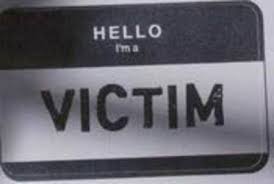
Politics of Victimhood or Freedom
Pınar Selek
The feminist network of the European Left (EL Fem) organized a European wide conference in late 2006. This conference, which was made in Italy with the participation of various feminist activists and politicians, was not really heard in Turkey. It tells us a lot about women’s movement and left in Europe and also provides us with a picture -even though a rough one- of our relation with victimhood. That’s why I’ve started my paper with it.
The aim of the conference was to bring out a plan for an international campaign against violence. For this purpose, developing a common perspective towards violence and specifying the primarily important subjects for the campaign was targeted. But the conference did not produce such an outcome.
We can tell a lot of reasons for this… Having lost its antisystemic character, “European feminism” is in need of a wider discussion. For this reason, I did not really have huge expectations from this conference. Bu still I didn’t expect that either. Because this conference had practical aims; a campaign was going to be produced of it… Despite this, instead of talking about “what is to be done”, victimhoods were discussed in the conference. In all through three days, I’ve listened how much we have suffered.
As soon as I’ve arrived at Italy they also wanted me to make such kind of a speech. Previously, it was already decided that my speech was going to be on war. Within this framework, I prepared a speech that theoretically and politically focused on the reasons why the feminist movement does not have an effective standpoint against war and made various suggestions for that. But they wanted me to talk about women’s experiences of victimhood in Turkey. People were hugging me by saying that “We know what you’ve experienced…Tell us about that…” Some of them were caressing my hair, some were squeezing my shoulders…They were sweet, tender and calming and everything was refined to such an extent that it was not possible to get out of it. I said “No.” “I came here as a representative of a women’s organization and I want to discuss in relation to the subject. If the subject of the meeting were sharing our victimhoods, I would have a lot to say on that. But we are going to discuss our struggle…” After long efforts to convince me on that I guess they’ve given my determination to my psychology as some of them came near me and asked if I needed any “support” saying that they can provide me with any kind facility. So I’ve started my speech with this theme: with the introduction of “I won’t tell you a story of victimhood’… From my own perspective I interpreted the role given to a feminist coming from Turkey and connected this to the speech I’ve prepared.
Afterwards, while a discussion about this issue was getting livelier, a Bosnian woman began to speak and told us about her experiences. Of course the agenda dissolved quickly. Because the aim of the women’s organizations there, that represented the Europe in general, was not really struggling against violence but it was rather satisfying their souls by acting in solidarity with the victims they choose.
After this meeting I’ve decided to write something on the issue of victimhood, which was already on my agenda for a long time.
Yes, I’ve been thinking on the issue of victimhood. Looking back on your own experiences and once again rethinking on them is something very empowering. Before anything else, it is a step towards being the subject of your existence. It is easy to look at the society, to interpret the experiences of others but it is something very hard to pull your own experiences apart… Another step after the first is generally not taken. You get tired and satisfied from the sloppy step you’ve made. You experience an early ejaculation and turn your back…But if you can take the second step you enter into another universe. The universe of Subjectivity.
I feel this universe lately.
Like each and every woman and a lot of men in this world, I am in positions of victimhood that can inspire thousands of analysis. It is difficult for me to think about these but the state of mind that I enter as I thumb these old pages, keeps me attached to those pages. Above all the victimhood I’ve experience in front of the public for the last eight years was a life experience in itself. This process showed me various situations that I’ve never thought of before. One of them was the way in which victimhood effected human relations and the political existence. Struggling with my own victimhood has rendered me more sensitive in this issue. With the effect of this experience I’ve looked around myself more carefully; with amazement, observed the relations that people but especially women established with victimhood and had my own conclusions on about that.
Solidarity is Something Beautiful
A big portion of society, especially those who search for freedom are under a continuous bombardment of violence. Therefore the emancipation struggle of the oppressed people within a society becomes a movement of solidarity at the same time. From time to time some of us become more desperate and the solidarity focuses on this.
Generally solidarity is constituted as a duty, a job and a political necessity and people are consumed within this atmosphere of solidarity. Things are done to show off but afterwards the one who is slapped is left alone with the trace of the slap on her face.
One of the reason behind our weakness in front of the mechanisms of violence is our superficiality towards each other…The lack of any effort, the weakness of our capacity to love and to understand are also weakening our standing side by side. This in return prevents the development of a genuine solidarity right from the beginning. Yet nothing can be established in the absence of solidarity. If the feeling and the reflex of solidarity is not flourishing in the face of victimhood, if we are not giving a hand to each other according to our special conditions then it is impossible to make the next steps.
One understands the meaning of victimhood after being slapped. Especially if we are being slapped one and after the other and also being stroke down with a kick…
We look for a hand to lift us. How nice is a warm hand, how much it empowers us and warms up our hand, how we stand up, how we walk… How we feel up with love. We gain a love that won’t be lost in all through our lives. Solidarity is something beautiful like that…
The most important lesson I’ve learned from my own experiences is the extent to which solidarity is something great and perfect. In the process of the events, which looking from now make ask “how come I was able to survive”, within this process, I’ve experienced such a genuine solidarity that the love that grew inside of me has absorbed all the horrors that surrounded me… Perhaps I was lucky, I don’t know. But in this process I’ve learned what is solidarity and what it is not. I’ve learned superficialities, truthfulness, faithfulness and sensitiveness.
How can it be possible for beauty to flourish in a place where there exists no love, no sensitiveness and sharing? If we don’t recognize and face victimhood, if we disregard and find it normal we would be justifying the violence of power relations. Yet doing politics by recognizing victimhood is something and doing victimhood politics is another…
The politics of victimhood is another name for basing politics on victimhood. Another name for reproducing thus strengthening the identities that have been created within the relations of power and doing this in the name of resistance. Today, this constitutes an obstacle in front of women’s struggle for freedom. But this is such kind of an obstacle that is not seen materially in front of us. Very inherent and too much pertaining to us… Right for this reason it is very important…
The Toy of Victimhood
The politics of victimhood is two sided. From the perspective of the victim and the one who relates to the victim… Both of these positions need one another. What differentiates solidarity from this politics, which may also function as a politics of sovereignty, is the approach of the latter locking up the victim to its situation. According to this, there is a hierarchical difference between the victim and those whom are in solidarity with the victim. We frequently witness to the very sick versions of this relation, which can easily turn into a bond of sovereignty if not acted in very sensitively.
I remember it was the processes soon after I got out of the prison. I was very popular in the public opinion and was uncomfortable with the coming to the fore of an identity that was dressed on me right from the beginning of the process and that I hated. I wanted to return to pre-1998 immediately. Back to before the Pınar Selek…To Pınar who walked in search of freedom with the curiosity of a sociologist; who dug the soil and wanted to silently open pathways for freedom… It is another point of discussion whether I’ve accomplished to do that or not. But in those days, a rude joke of a feminist journalist within the solidarity has affected me a lot. This journalist first listed the names of a few person whom were rendered heroes through their victimization by the state and said, “how nice it would have been if you had a love affair with one of these now…”
I looked at her with amazement. I remember myself botching up the joke by making very serious comments on it afterwards.
But this has left its trace on me.
It was only some time after I’ve got out of the prison. I was confused a little. Afterwards I have seen that this was a very general situation. I’ve seen and experienced how the identity of victimhood was established; how it was comfortable for everyone to relate with one another through it and how some other difficulties are faced with when one you want to get rid of it.
One of the most outstanding characteristics of the politics of victimhood is its establishment of a relationship that makes one dependent rather than free. Here the desire for always keeping the victim in the same position is very obvious. Because the relation here is not directly established with the victim but it is rather established with the position of the victim. And in return the personality of the victim is identified with this position. “False charity” which Freire talks about in his “Pedagogy of the Oppressed”, his gift to everyone of us, is also another expression for this position. The conscious of the false charitable who oblige the “rejects of life” to beg all the time, is inclined to turn everything around them to an object of sovereignty.
Sacrifice is an object of sovereignty. The situation that is developed by violence turns into an identity and the living conditions of the “sacrifice” is been created with this identity. An area is acknowledged for the victim to exist within and it is regarded as strange if the victim gets out of it. Everything made with reference to victimhood is acknowledged. But whenever a claim that subverted this position has been done peace is troubled. People are annoyed.
Sometimes victim turns into a toy. When the victim is freed from this identity some people gets deprived of their toy. And from time to time the grown ups who are deprived of their toy become much harsher than the kids do.
Getting caught in the identity of victim
The most destructive result of this relation is the recognition of victimhood as an identity, primarily by the person who experiences it in the first place. The ones who are in the positions of victim give themselves first into the warmness of solidarity and then to the facilities this position provides with them afterwards… Of course the victimhood discourse makes things easier. It is at the same time a source of income. Victims very quickly learn that they can achieve recognition only through their sufferings and thus highlight victimhood in a very exaggerated manner. It does not always occur in the form of exciting pity. But people should always feel sorry for not suffering as much as they did. Once get used to it, victims become unable to relate to others in different ways. The integration of womanhood with one’s own identity is a perfect example for this process. Such an extent that other social groups set the arm of victimhood through relating to values associated with womanhood. When the position of one takes priority over one’s character, all capacities weaken, lack of confidence increase and the state of victimhood become much more stabilized. Each day victims identify more with their position of victimhood; internalizing it as an identity and defining themselves through this identity.
The identity within which one gets caught in is blessed without really questioning the identities that are constructed within the relations of sovereignty. Pain is made something sweet. The posters of workers with big hands, ragged jackets, unpolished shoes and the state of being a worker is blessed…Politics produced over these identities reproduce the existing categories though. Therefore settling in the position of victimhood means the acknowledgement of power relations. Not only this: it means stabilizing power relations, making them permanent.
The marginality of victimhood
This position, which is subsumed into the identity of victimhood, is a situation in which the individual or the social group is marginalized and instrumentalized. Then, might the marginal positions of rights and freedom struggles be effected by their inability of to overcome the politics of victimhood?
The claim to be an opposition is a claim and action for overcoming victimhood and the positions established by the system. However, especially in Turkey we see that the politics of victimhood is dominant within the opposition. The agenda of the left is much more busy with torture and prisons. Instead of stressing the capacity for struggling against the relations of power in a multiple of ways, left is more on the agenda with the oppressions against itself. By taking its antisystemic side, the alternatives it develops or give voice to and the different pathways it opens even out of its own agenda, left is satisfied only by bring to the agenda how it has been victimized by the system and by making its politics only from within this victim identity.
The identity established over victimhood dulls all the capabilities of a person. After some time on, the victims are detaching themselves from their journalism if they are journalists, from their crafts if they are craftspeople or from their profession of economy, doctorate or law if they are economists, doctors or lawyers and start talking only over their own victimhoods. Talking, talking, talking…One gets very used to it. To such an extent that when the impact of past experiences weakens new “oppressions”, “detentions” and “imprisonments” are needed.
Because talking about this becomes what is known best.
The state of exception
The most destructive result of internalizing victimhood as an identity is the placement of what has been experienced at the center of the world, life and universe.
Schmitt defines sovereignity as “the one who decides on the exception”. For instance within the “contemporary and democratic” world, USA seems to be the only power deciding on the “exception” that suspended law, morality and the most basic human values in the world. On the other hand the state of exception always gets rationalized through some kind of a victimhood discourse. This discourse suddenly transforms itself within the discourse of sovereignty into a bell hanging on the skirts of power.
Against this privilege of the sovereign, the oppressed and the dominated ones, the victims also define a reversed privileged position generally. Like the egocentric position of the sovereign, the victims also see the state of exception occurring around themselves…Victimhood takes the victim into the universe of the exception. Most of the times it is through deciding on the exception that people resist against violence. Through focusing on the injustice experienced before, people with the victim identity would justify any kind of their behavior, which would seem illegitimate to them if done by others; they ornament their violence with the victimhood discourse. Because the position of victimhood is also a position of demand.
Agamben says, “The feelings of pain and being lost and the individual and collective expressions of these are not limited to a particular cultural model or with an authentic culture. As far as it seems, these are the intimate characteristics of humanity and the human condition that find their expression especially in borderline situations or the situations of marginality.”
Whatever it does, Israel is not “guilty.” The unspeakable victimhood that exists in its history continuously signifies its “state of exception.” Instead of problematizing violence in its totality and partnering with other victims’ experiences within the system of violence, it prefers to use its victimhood as immunity for its own violence. The Kurds and the Shiites in Iraq are in the same role with their victimhood costumes. The massacres in their history and the humiliations they’ve experienced make everything just for them.
Whoever gets into the identity of victim, that person attaches on her shoulder a role of receiver forever and a judgment of innocence whatever she makes…Becomes someone untouchable, someone that cannot be criticized or judged.
It is obvious that humans, oppressed people and women are not equal among themselves and that they should be treated by the consciousness of this inequality but the “state of exception” only consolidates these positions.
It’s not possible to bring freedom out of the politics of victimhood
To some women, you become afraid of asking the question of “How are you?” They always feel bad. They have awful illnesses. Consecutively bad things happen to them. They have financial problems. For some of them, this is so typical. Rather than nice things they talk about burdens one and after… You don’t say it but you regret asking it… And also they talk about their problems with spitefulness… As if they say, “See, my problems are greater than yours… I am much more a hero than you… Nobody shall ask, expect nothing from me anymore…”
Then, are these simple lies? Are women very happy that they are telling stories?
Indeed what we actually live cannot be described as a life. What shall we answer when it is asked? Or shall we say, “I am very well, I’m cool”? Or that “My life is pinkish… I am flying with love and joyfulness… The world is totally in peace with me… I am peaceful”?
Not like that. Not anything like that. Who does not have material problems in such a world of inequalities? How can we not have misfortunes in our lives, which are surrounded by violence, injustice and power mechanisms? We have… Are we in peace in the midst of the war, of destructions? No… Aren’t we all loosing our balance while we destroyed the balance of the nature? Yes. Are we happy within the cities of concrete, nylon and synthetic? No.
How are you? What is the answer? Ok, it cannot be answered easily. Moreover we should not be annoyed with the answers we get after asking, “how are you?” to women whose life is actually like a hell. It is necessary to share the pains, the malaises and deadlocks experienced… As they are shared, commonalities will be recognized and mutual solidarity will develop.
Here the concept of “mutuality” is very important… The one who is subsumed within the position of victim does not listen but only talks. Whenever a person in front of a victim starts talking, s/he is appeased by the victim’s troubles.
What happens next?
It is possible to live through holding on to troubles. As if they say, “By holding on to pains…” Women are the ones who make the most effective arm out of the position of victimhood and they are the ones who use it in the most sophisticated, aesthetic and “holy” way. Ok then what this arm provides women with? What did it provide until now? Are there any women who have been able to find salvation through holding on to the pains of victimhood? No. The experiences of women have shown that freedom cannot be obtained out of a politics of victimhood. If taking shelter in weakness and seeking justice out of weakness works out once then one gets stuck into the comfort of this path. Whenever she experiences difficulties she stresses womanhood, Kurdishness, homosexuality or handicap. These identities are actually the visible-invisible reasons or effects of various problems but still they are the ports that are taken shelter in immediately and continuously.
Is it too much that we took shelter in a port after all those victimhoods we’ve experienced? In the stormy sea within which we live, we will of course take shelter in some ports in order to gather some strength, to rest and to avoid from dangers most importantly. But we live in this sea and how are we going to learn to swim? We cannot learn swimming if we take shelter in ports each time we experience difficulties.
Freedom is not a port to take shelter in; it is not an ideal beyond the human. It is the power to change the reality of now. It cannot be taken as a present; it is created, given birth to, watered. Within this tornado of violence it is our responsibility to continuously chase freedom. Our own experiences of violence can be an important starting point. First of all we should see our own victimhoods. If we expand our agenda through neither forgetting nor being stuck into the violence we’ve experienced but rather starting from there and relating to other social groups victimized within all relations of sovereignty, then it would be possible for us to create our own existence.
For this reason let’s leave aside the advantages of being the ‘other’ and turn our face to others without forgetting our own experiences. To look and to see. To give an effort and to overcome the signs of violence together. To bring about examples of genuine solidarity. Genuine dialogues established with others give way to conflict, self-interrogation, criticism and self-criticism, being transformed and transforming others.
Rethinking your experience together with the experiences of others empowers one in establishing the future.
Feeling this power is something very nice and it is worthy of all burdens actually…
From Amargi- Issue 4